Blog
Zero-Turn vs Riding Mower: Which Is Right for You?

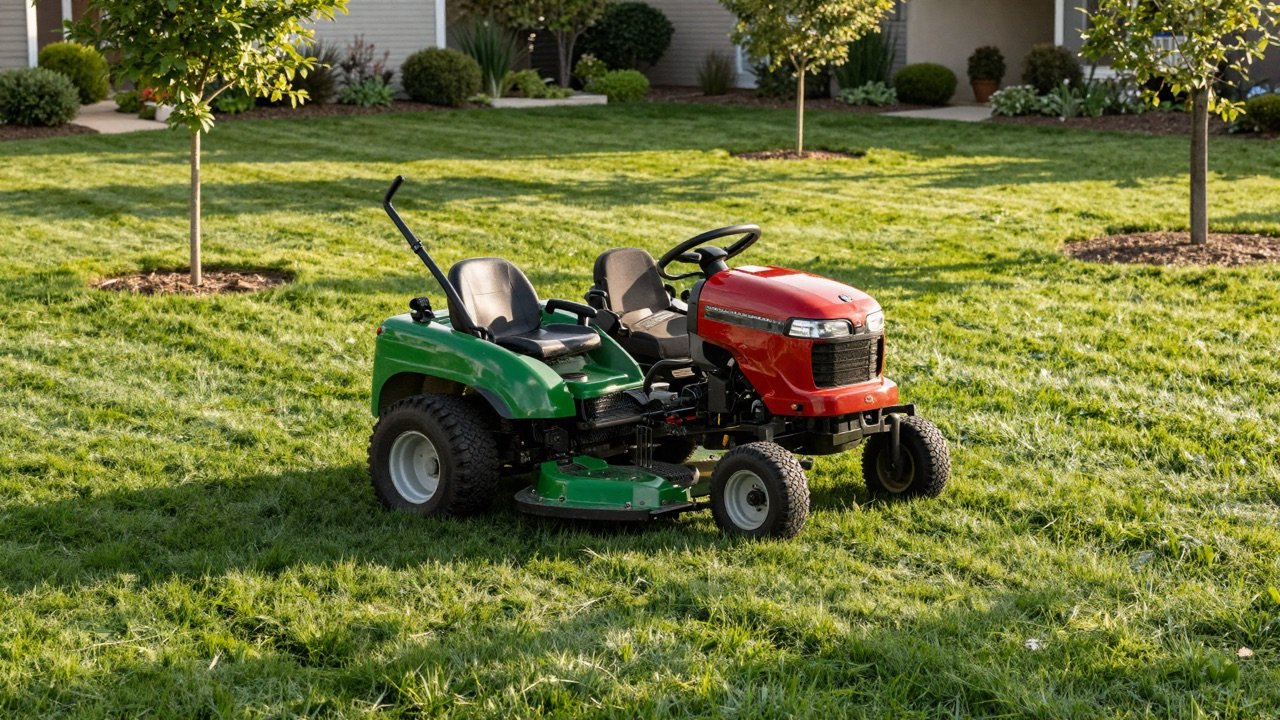
If you’ve outgrown the push mower and you’re staring down two big machines at very different price points, the zero-turn vs riding mower question can feel overwhelming. Both will cut your grass. Both save your back and your weekends. But they handle differently, cost differently, and shine on different kinds of property. Pick the wrong one and you’ll fight your lawn every Saturday. Pick the right one and mowing becomes the easy part of yard work. This guide breaks down exactly how these two mowers compare so you can buy with confidence.
Zero-Turn vs Riding Mower: The Short Answer
Here’s the quick version before we dig into details. A riding mower (often called a lawn tractor) steers with a wheel like a small car and is the affordable, versatile workhorse for most average yards. A zero-turn mower uses two lap-bar levers to control each rear wheel independently, letting it pivot in place and mow dramatically faster with cleaner edges.
- Choose a riding mower if you want lower upfront cost, easier learning curve, and the option to tow attachments.
- Choose a zero-turn mower if you have a larger or obstacle-heavy lawn and want to finish in roughly half the time with a more manicured look.
Both are excellent tools. The right answer depends on your yard size, terrain, budget, and how much you value speed over simplicity.
How Each Mower Actually Works
Understanding the mechanics makes the choice obvious for your situation.
Riding mowers (lawn tractors)
A riding mower has a front-mounted steering wheel and a mower deck slung underneath, usually between the axles. You drive it much like a go-kart: turn the wheel, press a pedal, go. Because the engine sits up front and it’s built like a miniature tractor, it can pull carts, spreaders, aerators, and even small plows. That versatility is a big reason these machines stay popular with homeowners who do more than just mow.
Zero-turn mowers
A zero-turn mower (often shortened to “ZTR”) replaces the steering wheel with two lap bars. Push both forward to go straight, pull one back to spin that wheel in reverse, and the machine rotates on its own footprint, hence “zero turning radius.” The deck typically sits out front or mid-body, so you can see exactly where you’re cutting. Once you adjust to the controls, you mow faster and trim around trees, beds, and posts without the constant back-and-forth a tractor requires.
Speed, Time, and Cut Quality
This is where the two machines separate most clearly. Zero-turns are built for speed and maneuverability.
- Mowing speed: Many residential zero-turns cruise at 6 to 8 mph, while typical riding mowers top out around 4 to 5 mph. On a big lawn, that gap can cut your mowing time nearly in half.
- Maneuverability: A zero-turn pivots around obstacles in one motion. A riding mower has to loop around, then come back to clean up the missed strip, adding time and leaving more trimming for the string trimmer.
- Cut quality: Zero-turns generally leave straighter lines and a more even, professional-looking finish, which is why landscaping crews use them all day.
If your weekends are precious and your lawn is dotted with flower beds, trees, or play sets, the time savings add up fast.
Cost: Upfront Price and Long-Term Value
Budget is usually the deciding factor, so let’s be straight about it. Entry-level riding mowers are the more affordable way to step up from a push mower, while comparable zero-turns command a premium for their speed and build quality. That said, “cheaper” and “better value” aren’t always the same thing.
Consider total ownership, not just the sticker:
- Purchase price: Riding mowers generally cost less to buy than a similarly sized zero-turn.
- Time value: If a zero-turn saves you an hour every week across a long mowing season, that reclaimed time has real worth.
- Durability: Many residential zero-turns use heavier-duty transmissions and frames, which can mean a longer service life under regular use.
- Resale: Well-maintained zero-turns tend to hold their value because demand stays strong.
For a small, simple yard, a riding mower’s lower cost is hard to beat. For a large property you’ll mow weekly for years, a zero-turn often pays for itself in saved time and longevity.
Terrain, Slopes, and Yard Size
Your land matters as much as your budget. Match the machine to the ground it has to cover.
Best for riding mowers
Riding mowers handle moderate slopes and uneven, bumpy terrain confidently because the front steering wheels grip and guide you. They’re also the smarter pick if you tow attachments or haul yard debris. For lawns up to roughly an acre with hills or rough patches, a tractor is dependable and forgiving.
Best for zero-turn mowers
Zero-turns excel on flat to gently rolling, open lawns, especially anything over an acre with lots of obstacles to mow around. They can lose traction and feel twitchy on steep or wet slopes, so very hilly properties call for caution or a tractor instead. On big, mostly level yards, nothing beats a ZTR for speed and tidy results.
- Under ½ acre, simple shape: A riding mower is plenty, and you’ll save money.
- ½ to 1 acre with obstacles: Either works; lean zero-turn if speed matters.
- Over 1 acre, open and flat: A zero-turn is usually the better tool.
- Steep hills or towing needs: Favor a riding mower.
Comfort, Learning Curve, and Maintenance
Day-to-day experience counts. Riding mowers are intuitive from the first minute because car-style steering is familiar to everyone. Zero-turns take a little practice; the lap bars feel sensitive at first, and beginners sometimes leave swerve marks until muscle memory kicks in. Give yourself a couple of sessions and it becomes second nature.
Both machines reward basic upkeep. Keep blades sharp, change the oil on schedule, check the air filter, and keep tire pressure even (especially on a zero-turn, where uneven pressure causes uneven cuts). Stock a few wear items like belts and blades so a busy mowing week never gets derailed. If you’re ever unsure which part fits your model, our team is happy to help you find it.
Frequently Asked Questions
Is a zero-turn mower worth the extra money over a riding mower?
For larger lawns, obstacle-heavy yards, or anyone who values speed and a cleaner cut, yes, a zero-turn is usually worth it because it cuts mowing time roughly in half and finishes more neatly. For small, simple yards, a riding mower delivers excellent value at a lower price.
Which is better on hills, a zero-turn or a riding mower?
A riding mower is generally safer and more stable on steep or uneven slopes thanks to its front steering wheels and weight distribution. Zero-turns can lose traction on steep or wet inclines, so reserve them for flat to gently rolling ground.
Are zero-turn mowers hard to learn?
They have a short learning curve because the dual lap-bar controls feel sensitive at first. Most people get comfortable within two or three mowing sessions, after which the precise steering becomes a real advantage around trees, beds, and posts.
Can a zero-turn mower tow attachments like a riding mower?
Some zero-turns can tow light carts or spreaders, but riding mowers are built for towing and pull heavier attachments more reliably. If hauling and ground-engaging tasks are a priority, a riding mower is the more versatile choice.
The Bottom Line
There’s no single winner in the zero-turn vs riding mower debate, only the right fit for your yard. Choose a riding mower for affordability, towing, hills, and an easy learning curve. Choose a zero-turn for speed, maneuverability, and a polished cut on larger, flatter lawns. Measure your property, count your obstacles, and be honest about your budget and your slopes, and the answer will be clear.
Ready to find your match? Browse our full lineup of riding mowers and zero-turns over at our shop, where every order ships free in the US and comes with 30-day returns. Have a tricky yard or a question about a specific model? Contact our real-person support team, or check the FAQ for quick answers, and we’ll help you roll into mowing season on the right machine.