Blog
What to Look for When Buying a Riding Lawn Tractor

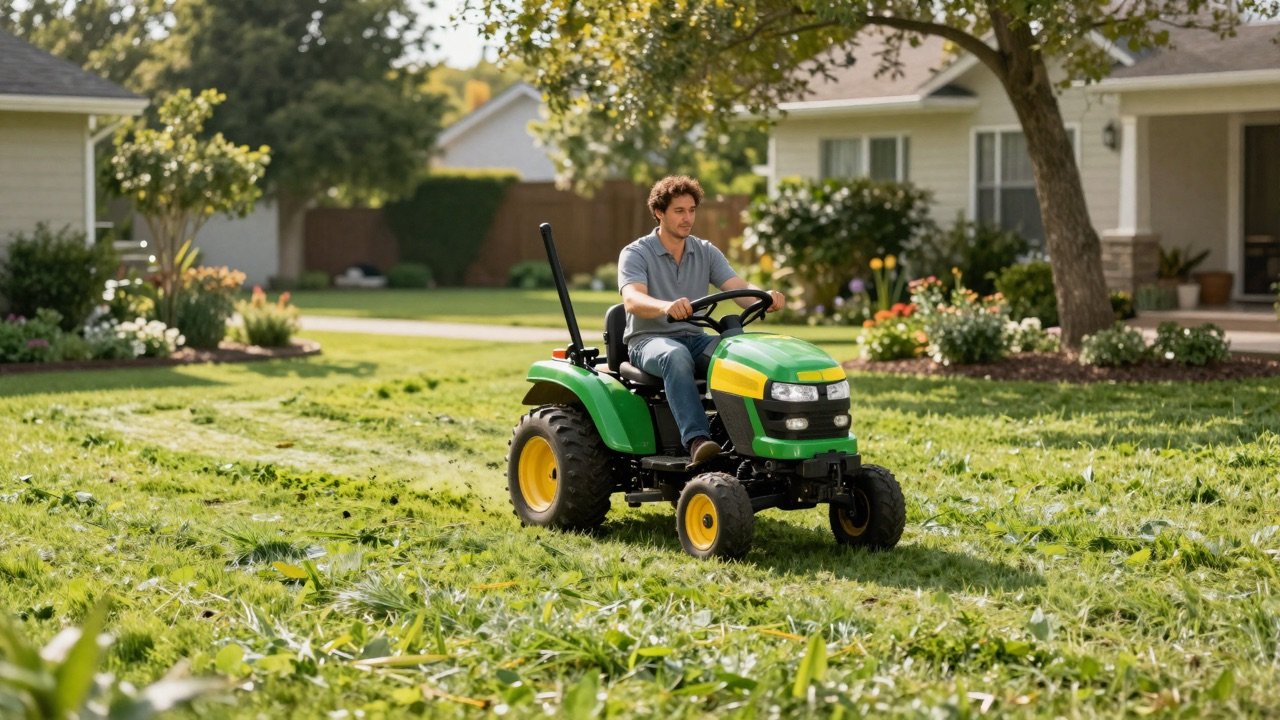
If your push mower has turned weekend lawn care into a two-hour workout, you’re probably ready to upgrade. But buying a riding lawn tractor is a bigger decision than grabbing a mower off a shelf. You’re choosing a machine you’ll likely keep for ten years or more, so it pays to know what actually matters. This guide walks you through the features worth your attention, the specs that are mostly marketing, and how to match a tractor to your specific yard so you buy once and buy right.
Start With Your Yard, Not the Showroom
The single biggest factor in buying a riding lawn tractor is the size and shape of the property you’ll be mowing. A machine that’s perfect for a flat half-acre can be miserable on a hilly two acres full of trees and flower beds. Before you compare a single model, get clear on what you’re working with.
- Yard size: Under 1 acre, ½ to 2 acres, or 2-plus acres. This drives nearly every other decision.
- Terrain: Flat, gently rolling, or steep. Slopes call for more power and better traction.
- Obstacles: Trees, garden beds, posts, and tight corners reward a tighter turning radius.
- Gates and storage: Measure the narrowest gate and your shed door. A tractor that doesn’t fit through either is a problem you can’t fix later.
Once you’ve answered these, you can shop with purpose instead of being swayed by the biggest, shiniest model on the lot.
Deck Size: Bigger Isn’t Always Better
The cutting deck is the housing that holds the blades, and its width determines how much grass you cut per pass. Wider decks finish big lawns faster, but they’re harder to maneuver in tight spaces. Here’s a simple rule of thumb to match deck width to acreage.
- 30 to 36 inches: Best for yards under ½ acre and properties with lots of obstacles or narrow gates.
- 42 to 46 inches: The sweet spot for most suburban lots between ½ and 2 acres. This is what most homeowners need.
- 48 to 54 inches: For larger properties over 2 acres where speed of mowing matters more than tight turns.
A 42-inch deck handles the majority of American yards beautifully. Don’t pay for a 54-inch deck you’ll struggle to steer around your oak tree.
Engine Power and Cylinders
Engine size is usually given in cubic centimeters (cc) or horsepower. More important than chasing a high number is making sure the engine matches your deck and terrain. A larger deck and hilly ground both demand more power to keep the blades spinning at full speed through thick grass.
Single-Cylinder vs. Twin-Cylinder
Single-cylinder engines are perfectly capable for flat, average-size lawns and cost less. Twin-cylinder engines run smoother, quieter, and handle hills and tall grass with less strain. If you mow more than an acre or deal with slopes, the twin-cylinder upgrade is usually worth it and tends to last longer under heavy use.
Transmission: How You Want to Drive
The transmission controls how the tractor moves and changes speed. This affects ease of use more than almost any other feature, so it’s worth understanding your options before buying a riding lawn tractor.
- Manual gear: You stop to shift between set speeds. It’s the most affordable and durable, but clunky on uneven ground.
- Automatic (hydrostatic): Speed is controlled by a pedal, like a car, with smooth, stepless adjustment. This is the most popular choice for good reason: it’s easy and lets you slow down for obstacles without stopping.
- CVT: A middle-ground belt-driven option that’s smoother than manual but generally less robust than hydrostatic.
For most homeowners, a hydrostatic transmission delivers the best balance of comfort and control. If your budget is tight and your yard is flat and open, a manual will still mow your lawn just fine.
Comfort and Convenience Features That Earn Their Keep
You’ll be sitting on this machine for an hour or more at a stretch, so comfort isn’t a luxury. A few features genuinely improve the experience and are worth looking for.
- High-back seat with springs: Your back will thank you after a long session on bumpy ground.
- Tight turning radius: Look for 16 inches or less if your yard has lots of trees and beds. It dramatically cuts down on re-mowing missed strips.
- Cruise control: Helpful on long, open stretches so you’re not holding the pedal the whole time.
- Easy deck-height adjustment: A hand lever with clear settings beats fiddling with tools.
- Discharge options: Side discharge, mulching, and bagging each suit different needs. Many decks accept all three with the right attachment.
- Headlights: Genuinely useful for early mornings and late evenings.
Build Quality, Warranty, and Parts
A tractor is only a bargain if it lasts. Look at the frame and deck construction, fender-style steel decks tend to hold up better than stamped thin metal over years of debris. Check the warranty length and exactly what it covers (engine versus full machine). Just as important, confirm that replacement parts like blades, belts, spindles, and filters are easy to get. A machine you can’t service quickly becomes an expensive lawn ornament. We stock a wide range of outdoor power equipment and parts so routine maintenance never sidelines your mowing season.
Set a Realistic Budget
Riding tractors span a wide price range, and the right number depends on yard size and how long you plan to keep it. Spending a little more for a twin-cylinder engine, hydrostatic transmission, and a sturdier deck often pays off in fewer repairs and a longer life. Factor in ongoing costs too: oil, blades, belts, and the occasional battery. If you’re unsure which model fits your property and budget, our team is happy to talk it through; just reach out through our contact page and a real person will help.
Frequently Asked Questions
How many acres do I need before a riding tractor makes sense?
As a general rule, a riding lawn tractor starts to make sense at around ½ acre. Below that, a self-propelled push mower is often quicker and easier to store. Above ½ acre, a rider saves real time and effort, and over 1 to 2 acres it becomes the practical choice.
What’s the difference between a lawn tractor and a zero-turn mower?
A lawn tractor steers with a wheel and is versatile, comfortable, and great for general mowing, towing, and slopes. A zero-turn mower uses lap bars for an extremely tight turning radius and mows faster on open, flat ground, but it’s pricier and less stable on steep hills. Your terrain and obstacle count should guide the choice.
Is a hydrostatic transmission worth the extra cost?
For most people, yes. A hydrostatic (automatic) transmission lets you change speed smoothly with a pedal, making it easier to slow down around obstacles and far more comfortable over a long mow. Manual transmissions cost less and are durable, but they’re best suited to flat, open lawns.
How long should a riding lawn tractor last?
With regular maintenance, a quality riding lawn tractor typically lasts 10 to 15 years or roughly 500 to 1,000 engine hours. Changing the oil, keeping blades sharp, cleaning the deck, and storing it under cover all extend its life considerably.
Ready to Find Your Tractor?
The best machine is the one that fits your yard, your terrain, and the way you like to work, not the one with the biggest spec sheet. When you know your acreage, the right deck size, and which transmission suits you, buying a riding lawn tractor becomes simple. Browse our full lineup of riding tractors and outdoor power equipment in the Garden Homes Realty shop, with free US shipping, 30-day returns, and real-person support whenever you need a hand. Have questions first? Contact us and we’ll help you choose with confidence.