Blog
What Size Generator Do You Need for Your Home?

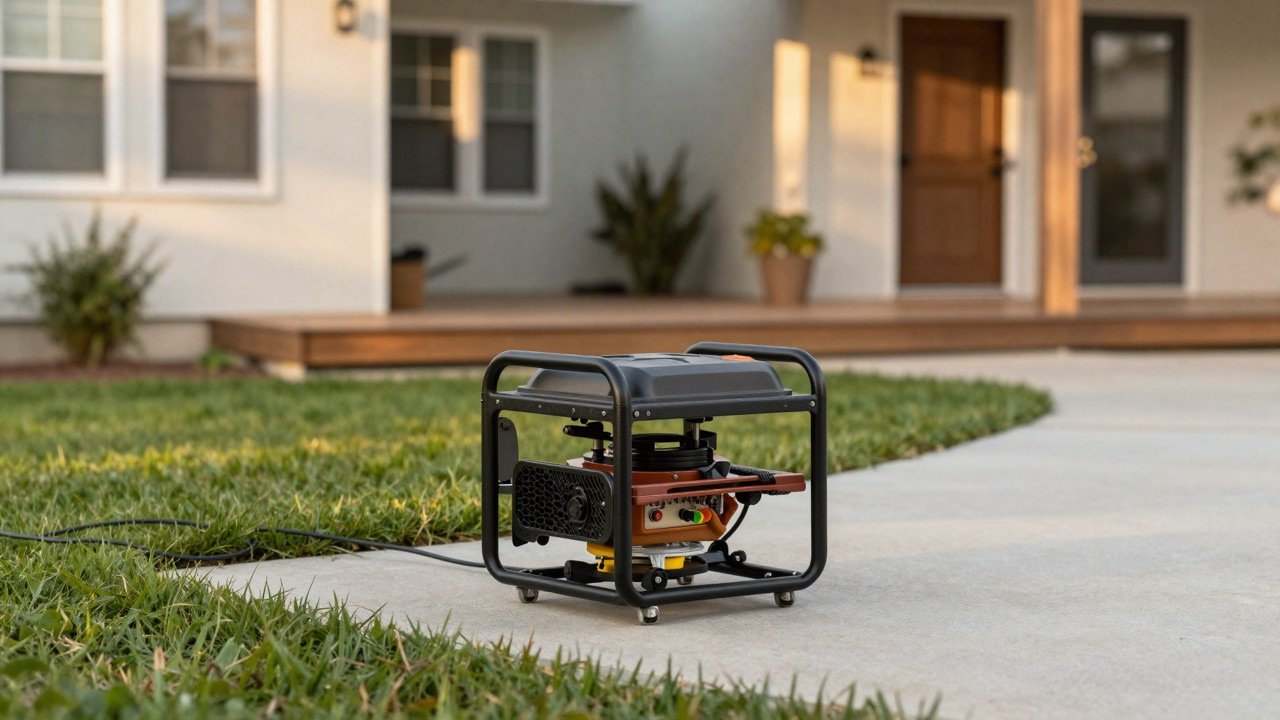
When the power goes out, the last thing you want is a generator that can’t keep up, or one so oversized you paid double for capacity you’ll never use. Figuring out what size generator you need comes down to a little simple math: add up the wattage of everything you want to run, account for the extra power motors need to start, and leave yourself some breathing room. This guide walks you through that process step by step so you can shop with confidence and pick the right unit the first time.
What “Generator Size” Actually Means
Generator size isn’t about physical dimensions. It refers to the amount of electrical power the unit can produce, measured in watts (or kilowatts, where 1 kW = 1,000 watts). You’ll usually see two numbers on a generator’s spec sheet:
- Running watts (rated watts): the continuous power the generator can supply, hour after hour.
- Starting watts (surge watts): the brief burst of extra power available for a few seconds when motor-driven appliances kick on.
That surge number matters more than people expect. A refrigerator might only need 700 watts to run, but it can demand 2,000+ watts in the split second the compressor starts. If your generator can’t cover that spike, the appliance won’t start or the generator will trip.
Step 1: Make a List of What You Want to Power
Before you can answer “what size generator do I need,” decide what the generator is actually for. Your goals shape the size dramatically. Be honest about whether you want to ride out a short outage with the essentials or keep the whole house humming.
Common priorities during an outage include:
- Refrigerator and/or freezer (protecting food)
- A few lights and phone chargers
- Sump pump (critical if your basement floods)
- Furnace blower or window AC unit
- Well pump (no power means no water for many rural homes)
- Medical equipment like a CPAP machine
- Wi-Fi router and a TV or laptop
Step 2: Add Up the Wattage
Now grab the running and starting wattage for each item. The numbers below are typical estimates; always check the label on your own appliance, since models vary.
- Refrigerator/freezer: 700 running / 2,200 starting
- Sump pump (1/3 HP): 800 running / 1,300 starting
- Well pump (1/2 HP): 1,000 running / 2,100 starting
- Furnace blower (1/2 HP): 800 running / 2,350 starting
- Window AC (10,000 BTU): 1,200 running / 1,800 starting
- Lights (10 LED bulbs): 100 running / 100 starting
- Microwave: 1,000 running / 1,000 starting
- TV and Wi-Fi router: 200 running / 200 starting
- Phone/laptop charging: 100 running / 100 starting
Here’s the key trick: add up all the running watts, then add only the single largest starting wattage on your list. Why just one? Because appliances rarely start at the exact same instant, so you only need surge capacity for the biggest motor firing up at once.
A Quick Worked Example
Say you want to run a refrigerator, sump pump, furnace blower, lights, and charge a couple of devices during a winter storm:
- Running watts: 700 + 800 + 800 + 100 + 100 = 2,500 watts
- Largest starting surge: furnace blower at 2,350 starting (which is 2,350 − 800 = 1,550 watts above its running draw)
- Total needed: 2,500 + 1,550 = about 4,050 watts
A 5,000-watt generator would handle this comfortably with room to spare. Always aim to use no more than about 80% of a generator’s rated capacity for steady, long-term running.
Step 3: Match the Math to a Generator Class
Once you have a target wattage, it maps cleanly to a category of equipment. Use these ranges as a starting point:
- 2,000–3,000 watts (recreational/inverter): Great for camping, tailgating, or running a fridge plus a few small devices. Quiet and fuel-efficient, but not enough for whole-home backup.
- 3,500–5,000 watts (mid-size portable): The sweet spot for essential home backup, fridge, furnace blower, sump pump, lights, and electronics during an outage.
- 6,000–9,000 watts (large portable): Powers most of a typical home, including a well pump and a window AC or two, often through a manual transfer switch.
- 10,000–20,000+ watts (standby/whole-home): Permanently installed units that run on natural gas or propane and start automatically when the power drops. These keep central AC, electric ranges, and the entire panel running.
Portable vs. Standby: Which Fits Your Needs?
Sizing also depends on the type of generator you choose. A portable generator is affordable, flexible, and perfect for occasional outages, but you have to roll it out, fuel it, and run cords or a transfer switch. A standby generator is wired into your home and turns on by itself, ideal if outages are frequent or you rely on medical equipment, but it’s a bigger investment and requires professional installation.
If you’re new to backup power and only lose electricity a few times a year, a mid-size portable usually delivers the best value. If you live somewhere with regular, long outages, a standby unit may be worth every penny. Not sure which path is right? Our team is happy to talk it through, just reach out through our contact page.
A Few Sizing Mistakes to Avoid
- Forgetting surge watts: The most common error. Always size for the largest motor’s startup, not just running watts.
- Running at 100% capacity: Leave roughly a 20% cushion so the generator isn’t strained and lasts longer.
- Ignoring fuel type: Gasoline is convenient but stores poorly; propane and natural gas are cleaner and easier to keep on hand for standby units.
- Overbuying: A generator far bigger than you need wastes money and burns more fuel at light loads.
Frequently Asked Questions
What size generator do I need to run a whole house?
Most average homes need a standby generator in the 18,000 to 22,000-watt (18–22 kW) range to run everything at once, including central air conditioning and an electric range. If you’re willing to manage which large appliances run at the same time, a 10,000–12,000-watt unit can cover much of the house.
Will a 5,000-watt generator run my home essentials?
Yes, for most households a 5,000-watt generator comfortably powers the refrigerator, a furnace blower or window AC, a sump pump, lights, and electronics, as long as the largest motor’s starting surge fits within its capacity. It’s one of the most popular sizes for storm backup.
How do I calculate starting watts versus running watts?
Add together the running watts of every device you’ll use at once, then add only the single highest starting (surge) wattage among them. That total is the minimum generator size you need, and we recommend choosing a unit rated about 20% higher for a safe margin.
Is it bad to buy a generator that’s too big?
An oversized generator won’t harm your appliances, but you’ll pay more upfront and waste fuel running it at a light load. It’s better to size for your actual needs plus a modest cushion rather than buying far more capacity than you’ll ever use.
Ready to Find Your Perfect Match?
Now that you know how to answer “what size generator do I need,” you can shop without second-guessing. Run the simple wattage math, pick the category that fits your home, and leave yourself a little headroom. Browse our full selection of generators and outdoor power equipment in the Garden Homes Realty shop, where every order ships free in the US and is backed by 30-day returns. Have questions about your specific setup? Get in touch and a real person will help you size it right the first time.