Blog
Self-Propelled vs Push Mower: Buyer’s Guide

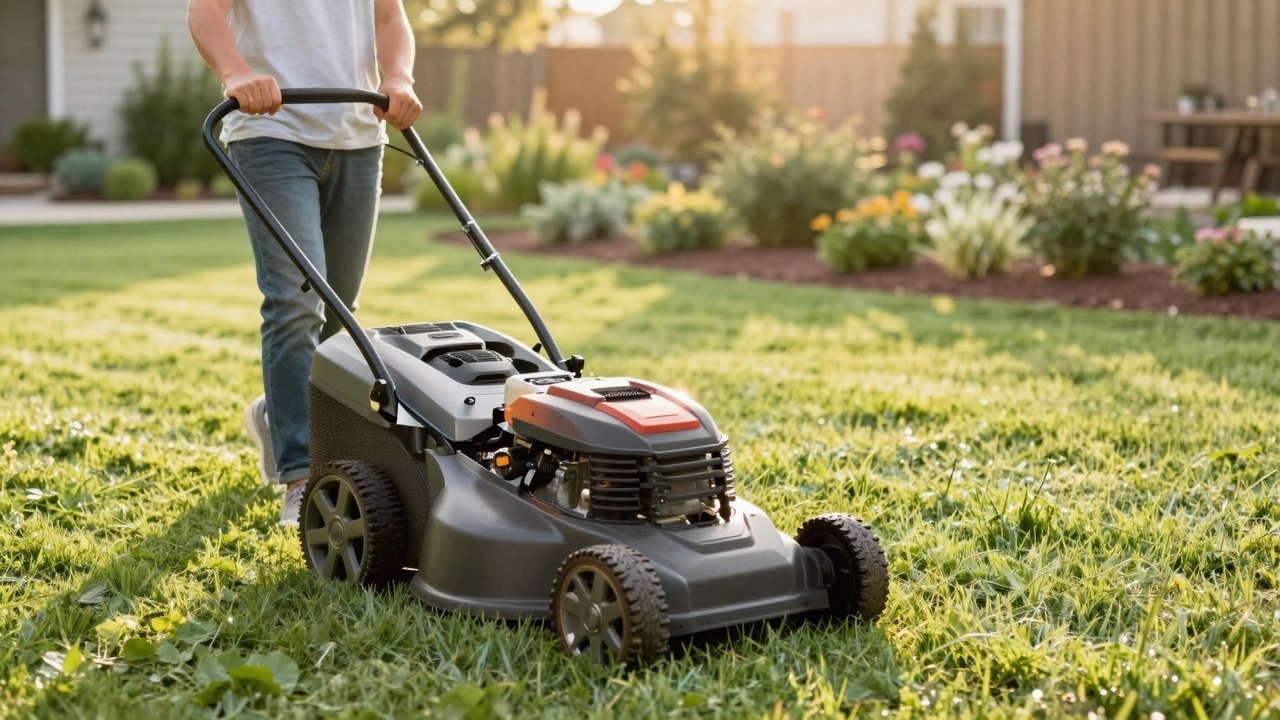
Choosing between a self-propelled vs push mower is one of the first big decisions every homeowner faces when buying a walk-behind lawn mower. Both cut grass well, both come in gas and battery versions, and both can last for years with basic care. The real difference comes down to how the wheels move, how much effort you put in, and what your yard actually demands. In this guide we’ll break down the trade-offs in plain English so you can pick the mower that fits your lawn, your budget, and your back.
Self-Propelled vs Push Mower: The Core Difference
The distinction is simpler than the marketing makes it sound. A push mower only moves forward when you push it. The engine or motor spins the blade, but your legs supply all the forward power. A self-propelled mower uses a transmission to drive the wheels, so the machine pulls itself across the lawn. You guide it, squeeze a control bar, and walk along behind at a comfortable pace.
That single mechanical difference ripples out into cost, weight, maintenance, and how tired you feel when you’re done. Neither is “better” in a vacuum. The right answer in the self-propelled vs push mower debate depends entirely on your specific yard.
How self-propelled drive systems work
Self-propelled models come in three drive types, and knowing them helps you shop smarter:
- Front-wheel drive (FWD): Easy to turn and tip up for trimming around obstacles. Best for flat lawns with lots of flower beds or trees.
- Rear-wheel drive (RWD): Better traction on slopes and when the bag fills with heavy clippings. A great all-rounder for varied terrain.
- All-wheel drive (AWD): Maximum grip for hilly, uneven, or bumpy yards where wheels might otherwise slip.
Many self-propelled mowers also offer variable speed control, letting you match the mower’s pace to your walking speed instead of the other way around.
Cost and Long-Term Value
Push mowers almost always cost less up front. With fewer moving parts, there’s no drive transmission, fewer cables, and less that can wear out. If your budget is tight or your lawn is small, a push mower stretches your dollar further.
Self-propelled mowers carry a higher sticker price, typically because of the added drive components. But “more expensive” isn’t the same as “worse value.” If a self-propelled model is the difference between mowing comfortably and dreading the chore, that comfort pays for itself across hundreds of mows. Consider total value, not just the price tag:
- Up-front price: Push mowers win.
- Repair complexity: Push mowers have fewer parts to fix.
- Effort saved: Self-propelled mowers win decisively, especially over time.
- Resale appeal: Self-propelled models often hold interest with buyers.
Yard Size and Terrain: The Deciding Factor
Your property usually settles the self-propelled vs push mower question faster than any spec sheet. Use these rough guidelines:
- Under 1/4 acre, flat: A push mower is light, simple, and plenty capable. You’ll be done before fatigue sets in.
- 1/4 to 1/2 acre: Either works, but self-propelled starts to feel worth it, particularly if you mow weekly in summer heat.
- 1/2 acre and up: Self-propelled saves real energy and time. The drive system does the hauling so you don’t.
- Hills or slopes: Self-propelled, ideally rear-wheel or all-wheel drive, for safer footing and less strain.
Thick, tall, or frequently damp grass also tips the scale toward self-propelled, since pushing a heavy deck through dense growth is genuinely tiring.
Weight, Effort, and Who Should Use Each
Push mowers are lighter and easier to lift, store, and maneuver into tight corners. That makes them friendly for small sheds, apartments with a strip of lawn, or anyone who likes the extra exercise of a manual workout.
Self-propelled mowers are heavier, but the drive system more than offsets that on open ground. They shine for larger lawns, sloped yards, and anyone who wants to reduce physical strain, including older homeowners or folks with knee, hip, or back concerns. The mower carries its own weight; you simply steer.
Gas vs battery applies to both
Don’t confuse the drive type with the power source. Both push and self-propelled mowers come in gas and cordless battery versions. Battery models run quieter, need almost no maintenance, and start with a button. Gas models offer longer continuous runtime for big jobs. Decide drive type first, then choose your power source.
Maintenance Differences to Plan For
Because a self-propelled mower has a drive transmission and extra cables, it has slightly more to maintain. Nothing dramatic, but worth knowing:
- Drive cables and belts: Self-propelled units may eventually need cable adjustment or belt replacement. Push mowers skip this entirely.
- Wheel gears: The driven wheels on self-propelled models can wear over many seasons.
- Shared upkeep: Both types need blade sharpening, deck cleaning, and (for gas) oil and air-filter care.
For most owners these are minor, occasional tasks. Keeping the deck clean and the blade sharp matters far more for cut quality than drive type does.
Frequently Asked Questions
Is a self-propelled mower worth the extra money?
For lawns over about a quarter acre, or any yard with hills, thick grass, or a homeowner who wants less strain, yes. The reduced effort across hundreds of mows usually justifies the higher price. For a small flat lawn, a push mower is the smarter buy.
Are push mowers harder to use than self-propelled?
They require more physical effort because you supply the forward motion. On a small, flat lawn that’s barely noticeable and even doubles as light exercise. On large or sloped yards, that effort adds up quickly, which is where self-propelled models pull ahead.
Do self-propelled mowers cut grass better?
No. Cut quality depends on blade sharpness, deck design, and mowing at the right height, not on whether the wheels are driven. A push mower with a sharp blade cuts just as cleanly as a self-propelled one.
Can I push a self-propelled mower like a regular mower?
Yes. Just release the drive control bar and it behaves like a push mower, though it will feel heavier because of the added drive components. This is handy for tight turns and trimming around obstacles.
Still weighing your options? The best choice in the self-propelled vs push mower decision is the one that matches your lawn and leaves you with energy to spare. Browse our full lineup of walk-behind mowers in the shop, read more buying tips in our FAQ, or reach out through our contact page and a real person will help you match the right mower to your yard. With free US shipping and 30-day returns, it’s easy to get started.